 Our Editorial Team (


What Are Gold and Silver IRA Companies?
Gold and silver IRA companies are specialized financial service providers that help investors establish and manage self-directed Individual Retirement Accounts (IRAs) holding physical precious metals. Unlike traditional IRAs that hold stocks, bonds, and mutual funds, a precious metals IRA allows you to own tangible assets — specifically IRS-approved gold and silver bullion coins and bars — inside a tax-advantaged retirement account.
These companies serve as the essential bridge between you and the complex regulatory framework governing precious metals retirement accounts. They handle the paperwork for account setup, coordinate with IRS-approved custodians, source qualified bullion through licensed dealers, and arrange segregated or commingled storage at approved depositories. Without a reputable gold and silver IRA company guiding the process, investors risk making costly compliance errors that trigger taxes, penalties, and even account disqualification.
The demand for gold and silver IRA services has grown substantially since the 2008 financial crisis and accelerated again during the 2020 market volatility and subsequent inflation surge. Investors increasingly recognize precious metals as a portfolio diversifier, inflation hedge, and safe-haven asset that behaves differently from paper assets when economic conditions deteriorate.
Key Roles a Gold and Silver IRA Company Plays
It is important to understand that gold and silver IRA companies are typically dealers and account facilitators, not custodians themselves. The actual custodian — a bank, credit union, or IRS-approved non-bank trustee — holds legal responsibility for the account. Leading companies like Augusta Precious Metals, Goldco, and Birch Gold Group maintain strong partnerships with established custodians such as Equity Trust Company and STRATA Trust Company to provide seamless service.
When evaluating gold and silver IRA companies, look for transparent fee disclosures, a strong track record with the Better Business Bureau and Business Consumer Alliance, clear buyback policies, and educational resources that empower rather than pressure you into a decision. The best companies prioritize long-term client relationships over one-time transaction volume.
How a Gold and Silver IRA Works: Step-by-Step
Understanding the mechanics of a gold and silver IRA is critical before committing funds. The process involves multiple parties — you as the account holder, the IRA company as dealer and facilitator, an IRS-approved custodian, and an approved depository — each playing a distinct legal role. Here is a clear, step-by-step breakdown of how the entire process works from account opening through ongoing management.
Step 1: Choose Your IRA Company and Custodian
Your first decision is selecting a reputable gold and silver IRA company. Once chosen, they will recommend or connect you with an IRS-approved custodian. You open a self-directed IRA (SDIRA) with the custodian — this is the legal account structure that allows alternative assets like physical metals. Most custodians charge a one-time account setup fee ranging from $50 to $100.
Step 2: Fund Your Account via Contribution, Transfer, or Rollover
There are three ways to fund a new precious metals IRA. A direct contribution for 2026 allows up to $7,000 for investors under age 50, or $8,000 for those 50 and older (the $1,000 catch-up contribution). A transfer moves funds directly between custodians from an existing IRA — this is not a taxable event. A rollover moves funds from a 401(k), 403(b), 457, or similar employer plan. You have 60 days to complete an indirect rollover to avoid taxes and a 10% early withdrawal penalty if you are under age 59½. A direct rollover (custodian-to-custodian) avoids this 60-day window entirely and is generally preferred.
Step 3: Select Your Precious Metals
Once your account is funded, you direct the IRA company to purchase specific IRS-approved metals. You choose from an approved product list, agree on pricing (which typically includes a 3–5% markup above the spot price), and submit a purchase direction letter to your custodian. The custodian then releases funds to the dealer.
Step 4: Metals Are Shipped Directly to an Approved Depository
This step is non-negotiable under IRS rules: the physical metals must be shipped directly from the dealer to an IRS-approved depository. You cannot take personal possession of the metals while they are in IRA status. Popular depositories include the Delaware Depository, Brink's Global Services, and the International Depository Services Group (IDS). Storage fees typically range from $100 to $300 per year depending on the depository and whether you choose segregated or commingled storage.
Step 5: Ongoing Management and Eventual Distribution
IRS Rules and Regulations for Gold and Silver IRAs
The Internal Revenue Code is highly specific about what qualifies as an acceptable precious metal investment inside an IRA. Failure to follow these rules can result in the IRS treating your entire IRA as a taxable distribution in the year of the violation — plus potential 10% early withdrawal penalties if you are under 59½. Understanding these rules before you invest is not optional; it is essential.
IRS Purity Requirements for Gold and Silver
Under IRC Section 408(m), gold held in an IRA must meet a minimum fineness of 0.995 (99.5% pure). Silver must meet a minimum fineness of 0.999 (99.9% pure). Platinum and palladium must both meet a 0.9995 (99.95% pure) standard. These purity thresholds eliminate many common gold and silver items from IRA eligibility, including most jewelry, numismatic coins valued primarily for rarity, and pre-1933 US gold coins.
IRS-Approved Gold Products
IRS-Approved Silver Products
The Home Storage IRA: A Dangerous Myth
You may encounter advertisements promoting 'home storage gold IRAs' or 'checkbook IRAs' that claim you can legally store IRA metals at your home. The IRS has consistently challenged this arrangement. IRS guidance and court rulings have established that taking personal possession of IRA metals — including storing them at your home — constitutes a taxable distribution. The tax court case McNulty v. Commissioner (2021) reinforced this position, ruling against a taxpayer who stored IRA gold coins at home. The IRS may treat the full account value as a taxable distribution with penalties. Do not fall for this marketing claim.
Collectible coins — including most rare or numismatic coins — are also explicitly prohibited under IRC Section 408(m)(2) regardless of their metal content. This means many South African Krugerrands minted before 1986 and pre-1933 US gold coins do not qualify, even though they are primarily gold. Always verify a coin's IRA eligibility with your custodian before purchasing.
Gold and Silver IRA Fees and Costs: What You Will Actually Pay
Transparency about fees is one of the most important factors in evaluating gold and silver IRA companies. The cost structure for a precious metals IRA differs significantly from a standard brokerage IRA, and failing to account for these expenses can substantially erode your returns. Here is a complete breakdown of every fee category you should expect and what constitutes a reasonable charge versus a red flag.
One-Time Setup and Account Opening Fees
Most custodians charge a one-time account setup fee to establish your self-directed IRA. This typically ranges from $50 to $100. Some gold IRA companies pay this fee on your behalf as part of a promotional incentive, particularly for accounts funded above a certain threshold (often $25,000 or more). Wire transfer fees for funding your account can add another $25 to $50 per transaction.
Annual Custodian Maintenance Fees
Custodians charge an annual fee to maintain your self-directed IRA, process transactions, generate statements, and handle IRS reporting. These fees generally range from $75 to $200 per year. Some custodians use a flat fee structure while others use a scaled fee based on account value. For smaller accounts under $50,000, flat fees are generally more cost-effective.
Depository Storage Fees
Physical storage at an IRS-approved depository is a mandatory, ongoing cost. You will choose between two storage types. Commingled storage pools your metals with other clients' holdings in a shared vault — cheaper, typically $100 to $150 per year. Segregated storage keeps your specific coins and bars physically separate and identified as yours — more expensive, typically $150 to $300 per year. Segregated storage is generally recommended for larger accounts and provides clear evidence of ownership in the unlikely event of depository insolvency.
Dealer Markups on Precious Metals
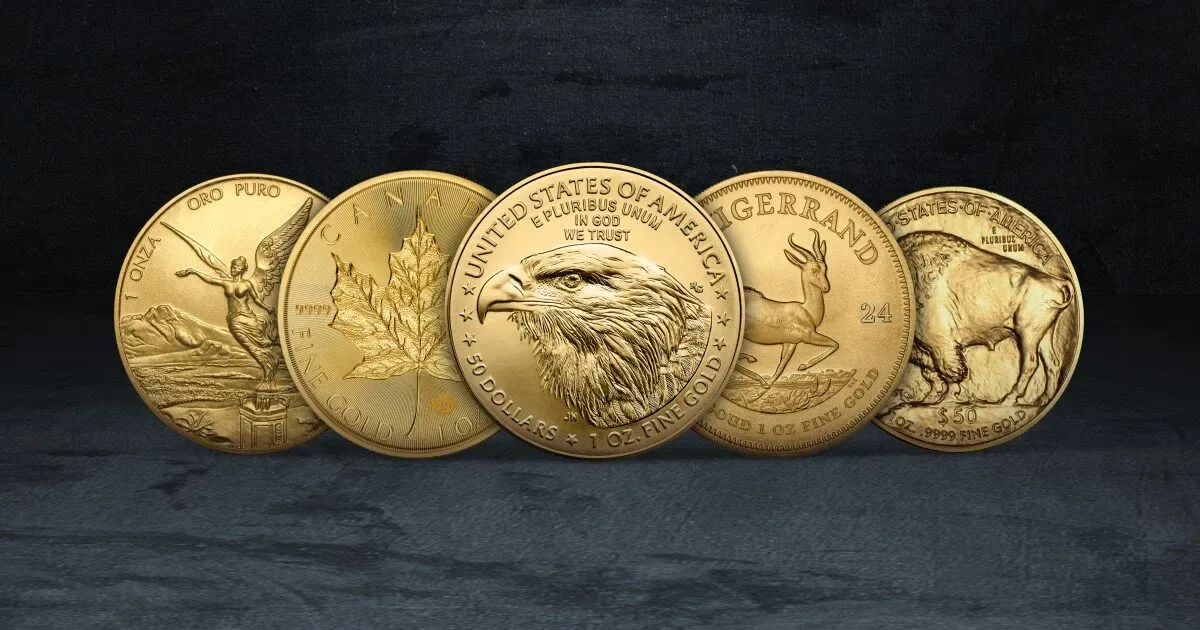
The most significant cost in a precious metals IRA is often the dealer markup above the spot price of gold or silver. Standard markups for common bullion products fall in the 3% to 5% range above spot. However, premium coins like American Gold Eagles often carry higher premiums of 5% to 8% above spot due to their numismatic appeal and collector demand. Be wary of companies pushing high-premium 'exclusive' or 'limited edition' coins that carry 20%–30% markups — these effectively lock your investment into a substantial loss position from day one.
Full Annual Cost Example for a $50,000 Gold IRA
The fee burden as a percentage of account value decreases as your account grows, making precious metals IRAs relatively more cost-efficient at higher balances. Most financial advisors suggest a minimum account size of $20,000–$25,000 before the fee structure becomes palatable. Many leading companies offer fee waivers for the first one to three years on accounts above $50,000, which can represent $350–$1,050 in savings.
Pros and Cons of Gold and Silver IRAs
Like any investment vehicle, gold and silver IRAs offer distinct advantages and meaningful disadvantages. Making an informed decision requires honestly assessing both sides rather than relying on the often one-sided marketing materials circulated by precious metals dealers. Here is an objective evaluation of the primary benefits and risks.
Advantages of Gold and Silver IRAs
Disadvantages of Gold and Silver IRAs
Most financial planning professionals suggest limiting precious metals exposure to 5%–15% of a total retirement portfolio rather than concentrating solely in gold and silver. This allocation captures the diversification and inflation-hedge benefits without sacrificing the compounding potential and income generation offered by equities and bonds.
Top Gold and Silver IRA Companies Compared
The gold and silver IRA industry includes dozens of companies ranging from highly reputable, long-established firms to aggressive newcomers with questionable practices. Choosing the right company requires evaluating minimum investment requirements, fee transparency, customer reviews, buyback policies, and the quality of educational resources provided. Below is an overview of the most prominent companies in the space.
Augusta Precious Metals
Augusta Precious Metals consistently earns top ratings from both the Better Business Bureau (A+ rating) and the Business Consumer Alliance (AAA rating). The company is known for its exceptional educational approach, including a one-on-one web conference with an economist before account opening. Augusta's minimum investment is $50,000, making it best suited for investors with substantial rollover funds. They have a transparent, all-inclusive pricing model and offer a lifetime support commitment to clients. Augusta focuses exclusively on gold and silver and does not push platinum or palladium.
Goldco
Goldco is one of the highest-volume gold IRA companies in the United States, with an A+ BBB rating and thousands of five-star reviews. Their minimum investment is $25,000 for a precious metals IRA. Goldco is known for an aggressive but professional marketing approach, frequent celebrity endorsements, and competitive pricing on American Gold Eagle and Silver Eagle coins. They partner with Equity Trust Company as their primary custodian and offer a buyback guarantee at the highest price they can offer.
Birch Gold Group
Founded in 2003, Birch Gold Group has one of the longest operating histories among modern gold IRA companies. With an A+ BBB rating and strong reviews on Trustpilot, Birch caters to investors with a $10,000 minimum — one of the lower thresholds in the industry. They offer gold, silver, platinum, and palladium and are known for strong customer education materials and patient, non-pressured sales consultants. Birch works with multiple custodians including Equity Trust and GoldStar Trust.
American Hartford Gold
American Hartford Gold has grown rapidly since its 2015 founding and holds an A+ BBB rating. They have a no-minimum-stated policy for gold IRAs (though in practice smaller accounts may face proportionally higher fees). The company is known for price-match guarantees, free shipping on all orders, and a three-day right-of-rescission period. Their buyback program accepts precious metals purchased anywhere, not just through American Hartford Gold.
Key Comparison Factors
Gold and Silver IRA Tax Rules: Traditional vs. Roth
The tax treatment of your gold and silver IRA depends entirely on the account type you choose. The two primary options — Traditional IRA and Roth IRA — offer fundamentally different tax advantages, and the right choice depends on your current income, expected future tax bracket, and retirement timeline. Understanding the tax rules thoroughly can result in substantially more after-tax wealth at retirement.
Traditional Gold IRA: Tax-Deferred Growth
With a Traditional gold IRA, contributions may be tax-deductible depending on your income and whether you or your spouse have access to a workplace retirement plan. Investment growth inside the account — including price appreciation of gold and silver — accumulates tax-deferred, meaning you pay no taxes on gains until you take distributions. Withdrawals in retirement are taxed as ordinary income at your applicable rate. For 2026, the contribution limit is $7,000 ($8,000 for those age 50 and older). Required Minimum Distributions (RMDs) must begin by April 1 of the year following the year you turn age 73.
Roth Gold IRA: Tax-Free Growth
A Roth gold IRA is funded with after-tax dollars — no upfront deduction — but all qualified distributions in retirement are completely tax-free, including all appreciation in your gold and silver holdings. This is a powerful advantage if you expect precious metals to appreciate substantially or if you anticipate being in a higher tax bracket in retirement. Roth IRAs have no RMD requirements during the account holder's lifetime, providing greater flexibility in retirement income planning. For 2026, the same $7,000/$8,000 contribution limits apply, but income phase-outs restrict Roth eligibility: single filers begin phasing out at $150,000 MAGI and are fully phased out at $165,000. Married filing jointly phase-out begins at $236,000 and ends at $246,000.
Rollover Tax Rules
When rolling over funds from an employer plan (401k, 403b, 457) into a gold IRA, the tax treatment depends on the rollover method. A direct rollover (custodian-to-custodian transfer) is not a taxable event and carries no withholding requirement. An indirect rollover pays funds directly to you, at which point the plan administrator is required to withhold 20% for federal taxes. You must deposit the full original amount — including the 20% withheld — into the IRA within 60 days to avoid taxes and penalties. You then recover the withheld 20% when you file your tax return. This complexity is why direct rollovers are strongly preferred.
Early Withdrawal Penalties and Exceptions
Gold vs. Silver IRA: Which Precious Metal Is Right for You?
While gold and silver are both eligible precious metals for IRA investment and are often discussed together, they have meaningfully different investment profiles. The gold-to-silver ratio — which measures how many ounces of silver are required to purchase one ounce of gold — has historically ranged from 30:1 to 100:1, providing insight into relative valuation at any given time. Understanding the distinct characteristics of each metal helps you make a more informed allocation decision.
Gold: The Monetary Metal
Gold is primarily a monetary and store-of-value asset. Approximately 54% of annual gold demand comes from jewelry, roughly 7% from technology applications, and the remainder from investment and central bank purchases. Because gold's industrial demand is relatively modest, its price is largely driven by investment sentiment, inflation expectations, currency values (particularly the US dollar), and central bank activity. Gold is less volatile than silver and tends to hold its value more consistently across economic cycles. As of mid-2026, gold trades at approximately $3,200–$3,400 per troy ounce.
Silver: The Industrial and Monetary Metal
Silver occupies a dual role as both monetary metal and critical industrial commodity. Approximately 50%–55% of annual silver demand comes from industrial applications including solar panels (photovoltaic cells), electronics, electric vehicles, medical devices, and water purification. This industrial demand creates a fundamentally different price dynamic than gold: silver tends to outperform gold during economic expansions when industrial activity is strong, but underperform during recessions when industrial demand contracts. Silver is significantly more volatile than gold — it is not unusual for silver to move 2–3 times the percentage of gold on any given day. As of mid-2026, silver trades at approximately $32–$36 per troy ounce.
Practical Considerations for IRA Allocation
Neither metal is universally superior — the right mix depends on your investment thesis, time horizon, and overall portfolio structure. Conservative investors focused on capital preservation and purchasing power protection often favor gold-heavy allocations, while investors with a longer time horizon and higher risk tolerance may overweight silver to capture its greater upside potential during precious metals bull markets.
Red Flags to Avoid When Choosing a Gold and Silver IRA Company
The gold and silver IRA industry, while home to many legitimate and ethical companies, also attracts bad actors who use high-pressure sales tactics, deceptive pricing, and misleading product recommendations to extract maximum profit from unsuspecting retirement savers. Knowing the red flags before you engage with any company can save you from costly mistakes that are difficult or impossible to reverse once the account is established.
High-Pressure Sales Tactics
Legitimate gold IRA companies give you time to think. Be extremely skeptical of any salesperson who creates artificial urgency — claiming that prices will spike tomorrow, that a 'special offer' expires tonight, or that economic collapse is imminent and you must act immediately. These are classic high-pressure manipulation tactics designed to short-circuit your rational decision-making process. A trustworthy company welcomes your request to review materials, consult a financial advisor, or take a few days to decide.
Numismatic Coin Pushing
One of the most profitable maneuvers for unscrupulous dealers is steering clients toward rare, collectible, or 'proof' numismatic coins that carry enormous premiums above their metal content value — sometimes 30%–100% above spot. These coins are marketed as 'uncirculated,' 'rare,' or 'special edition' and the salesperson may claim they have greater appreciation potential. In reality, the premiums on these coins rarely recover even in a strong gold bull market, and some numismatic coins are not even IRA-eligible. Stick to standard bullion coins (American Gold Eagles, Gold Buffalos, Silver Eagles) with transparent, market-based premiums of 3%–8%.
Additional Red Flags to Watch For
Before opening any precious metals IRA, check the company's standing with the Better Business Bureau (bbb.org), the Business Consumer Alliance (businessconsumeralliance.org), Trustpilot, and Google Reviews. Also verify the custodian they recommend through the IRS list of approved non-bank trustees or confirm they are a federally chartered bank or credit union. Taking two to four hours for due diligence before committing can protect tens of thousands of dollars in retirement savings.